Food & Culture
Scone vs. Biscuit: What’s the Difference?
August 18, 2026 · 6 min read
A scone is a slightly sweet British quick bread with a tender, close crumb, usually enriched with egg and cream, and eaten on its own with jam and clotted cream. A biscuit is a savory American quick bread made with buttermilk and folded so it bakes into flaky, pull-apart layers, usually eaten alongside a meal. Both are quick breads, both start with cold butter cut into flour, and both go into a hot oven the moment they come together. The differences come down to four things: sweetness, what goes in for liquid and egg, how the dough is handled, and what ends up on the plate beside them.
We get this question constantly, and it is a fair one to ask in a town where the biscuit is practically a civic institution. If muffins are the comparison you actually have in mind, here is the difference between a scone and a muffin.
What makes a scone a scone
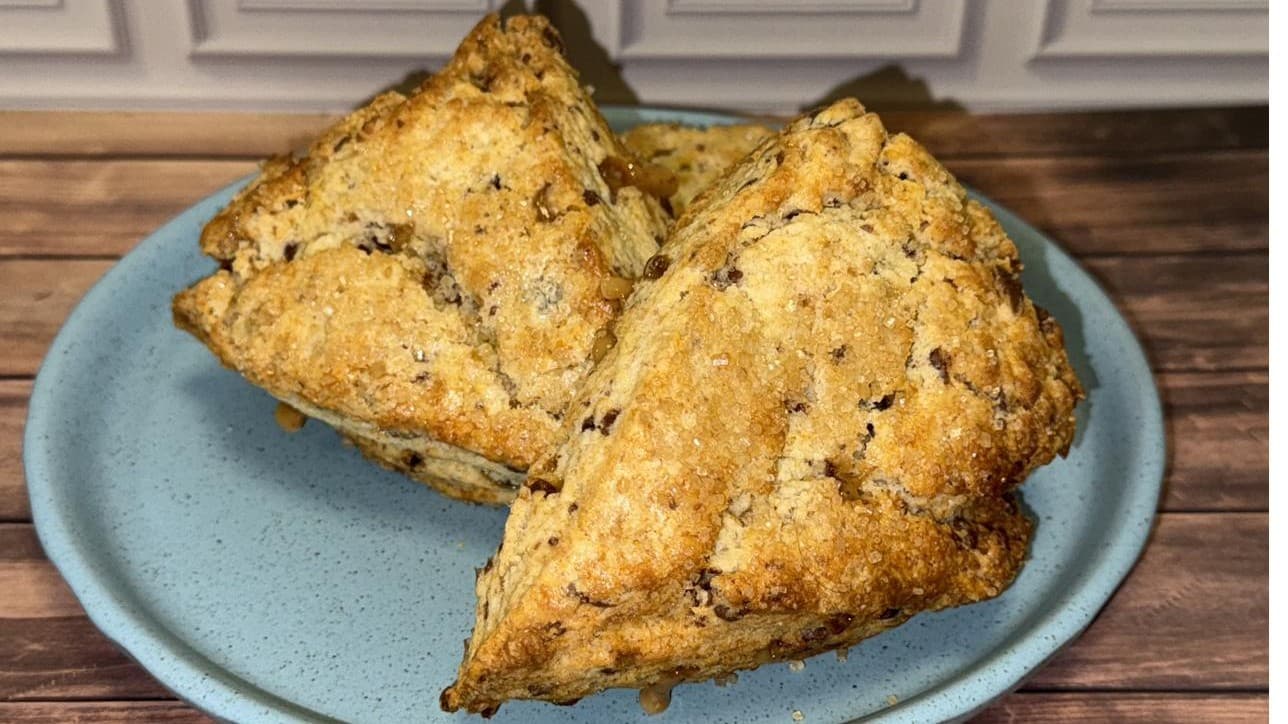
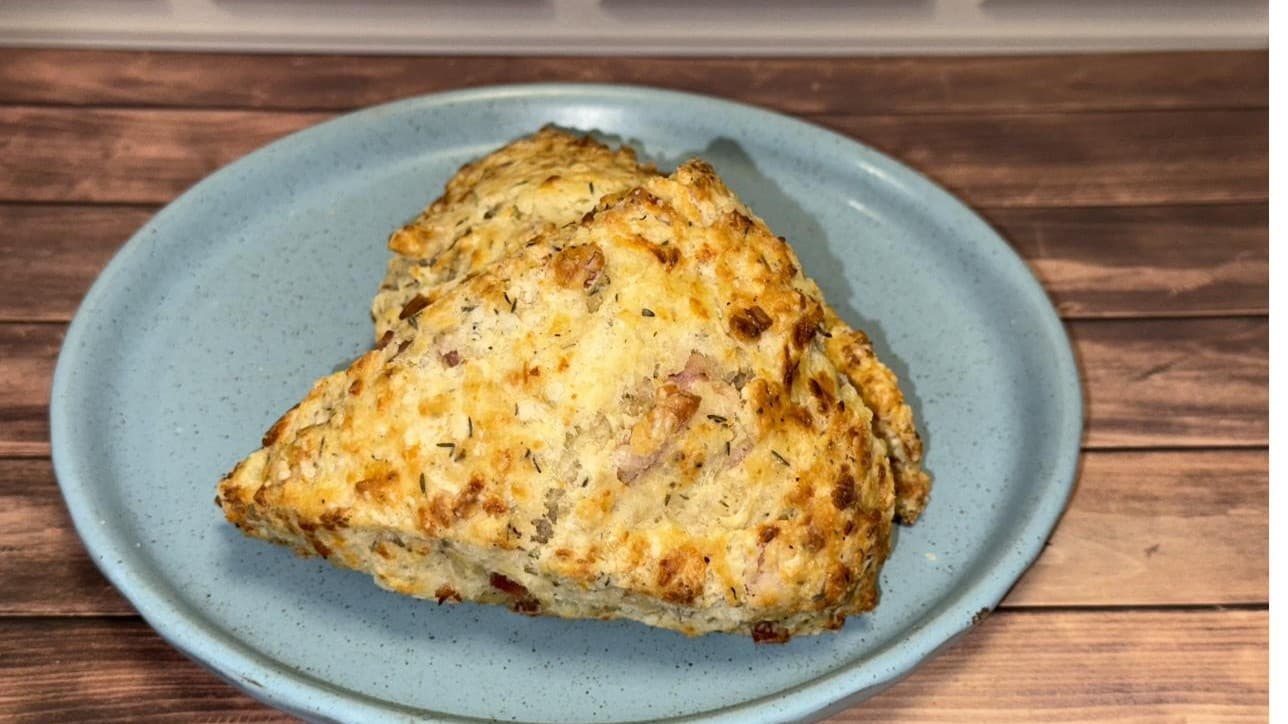
A scone is British, and it is built to be eaten on its own. The dough is enriched, which is the part that matters most. Egg and cream or whole milk give it a richer, denser crumb than a biscuit has, and a small amount of sugar gives it a gentle sweetness even when the flavor itself is savory. Cheddar and chive still reads as a scone, not as bread. We dig into that savory side, and why even a savory scone still carries a little sugar, in A Guide to Savory Scones.
The texture people are looking for is tender and slightly crumbly, with a close crumb that holds together when you split it. A proper British scone rises tall and straight and breaks cleanly across the middle. It does not shred into layers, and it is not supposed to.
Scones are also cut differently depending on tradition. Round cutters are the British standard. The triangular wedge most Americans picture is a later coffee shop convention. If you want the longer history of how the pastry got here, we walked through it in All About Scones.
What makes a biscuit a biscuit
A biscuit is American, it is Southern in its best-known form, and it is bread at a meal rather than a treat with tea. There is little or no sugar in it. Buttermilk does the heavy lifting, reacting with baking soda for lift and adding a faint tang, and there is typically no egg at all.
The real distinction is in the handling. Biscuit dough gets rolled out and folded over on itself, sometimes several times, and each fold traps a sheet of cold butter between sheets of dough. In the oven that butter turns to steam and pushes the sheets apart. The result is a biscuit you can peel open in layers, which is exactly the texture nobody wants in a scone.
So the two doughs are close cousins on paper and genuinely different in the hand. One is enriched and cut, the other is lean and laminated.
Scone vs. biscuit at a glance
| Scone | Biscuit | |
|---|---|---|
| Origin | Britain | American South |
| Sweetness | Lightly sweet, even in savory flavors | Savory, little to no sugar |
| Liquid | Cream or whole milk | Buttermilk |
| Egg | Usually yes | Usually no |
| Dough handling | Mixed, patted, cut | Rolled and folded to build layers |
| Texture | Tender, close, crumbly | Flaky, layered, pull-apart |
| Usual role | A treat with tea or coffee | A side or a sandwich at a meal |
| Served with | Jam and clotted cream, or butter | Butter, gravy, honey, or a fried egg |
Why the word "biscuit" means two different things
Ask for a biscuit in London and you will be handed a cookie. The word traveled a different road on each side of the Atlantic, which is why an American biscuit has no British equivalent by that name, and why British tea biscuits confuse American visitors on their first trip.
This is the same kind of split that makes people argue about how to say the word scone in the first place. Both pronunciations are correct, and which one is right depends entirely on where in Britain you happen to be standing. We settled that one, or at least laid out the evidence, in Scone, Scon, or Scoan?.
British scones and American scones are not the same thing either
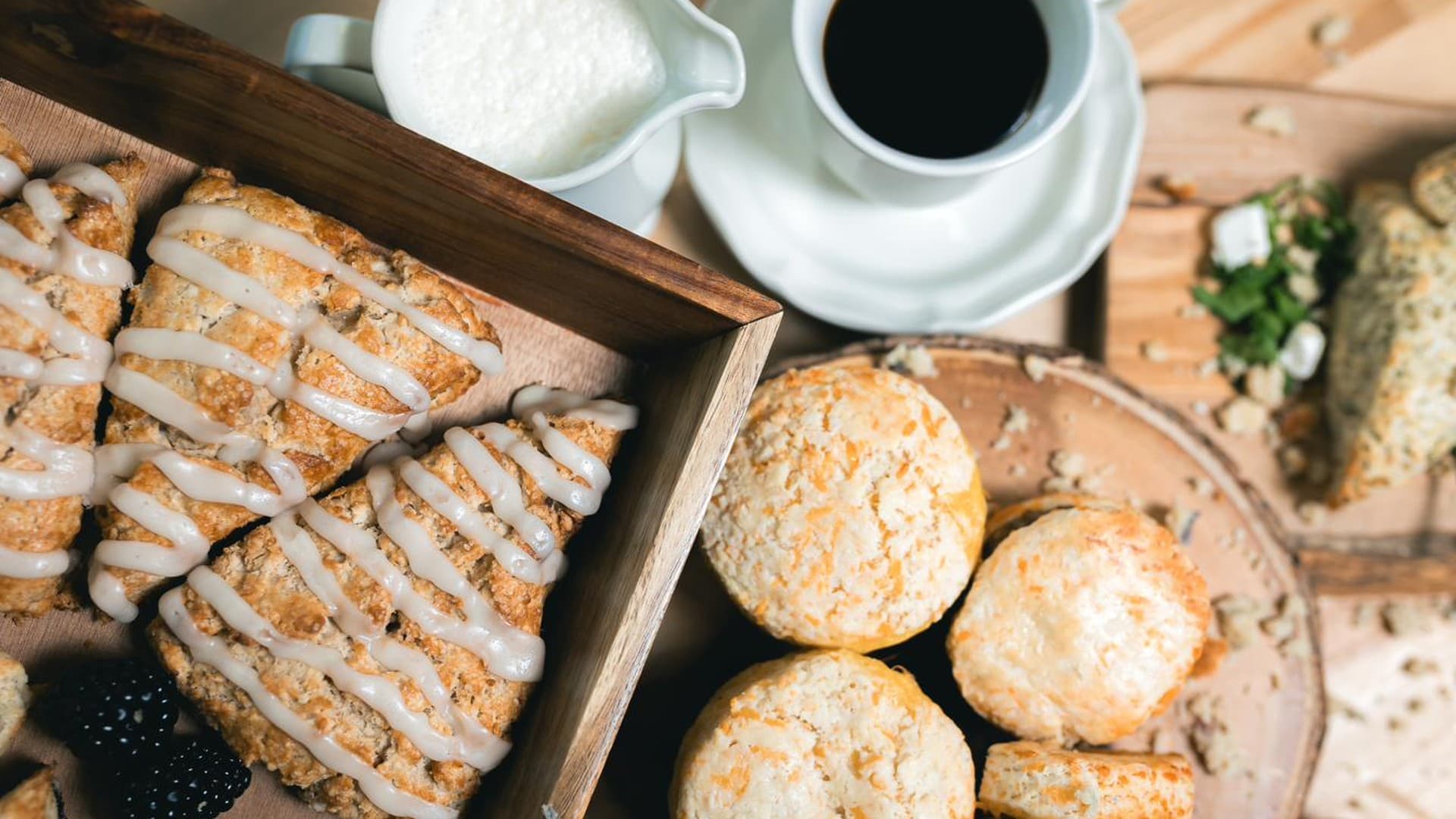
Before the biscuit comparison even comes up, there is a fork in the road inside the scone category itself. The British scone is round, moderately sweet, and meant to be split and topped. The American coffee shop scone is usually triangular, noticeably sweeter, often heavier and drier, and finished with a glaze.
That difference matters here because the American version sits closer to a sweet pastry, while the British version sits closer to bread. Someone comparing a glazed wedge to a buttermilk biscuit is comparing two things much further apart than a British scone and a biscuit actually are. We bake in the British tradition, which we get into in Traditional British Scones.
When to reach for which
A biscuit wants a plate and something alongside it. Gravy, eggs, fried chicken, a smear of butter and honey. It is the supporting structure of a Southern breakfast.
A scone wants a cup beside it and not much else. Tea in the traditional case, coffee just as happily, and it holds its own without a meal built around it. That self-contained quality is the whole reason it works as a mid-morning stop rather than a sit-down. If you want to think about the cup side of that equation, we broke down how to pair coffee and scones.
So which one is better
We are not going to pretend to be neutral here. We named the place after one of them, and we have made our case for the scone at length elsewhere.
But the honest answer is that they are not competing. A biscuit belongs to a meal and a scone belongs to a pause in the day. Savannah has room for both, and we would not want to live in a version of this city that didn't.
There is a third option in the mix, and it happens to be ours. A Scuffin is scone dough pressed into a muffin tin and filled, so the walls of the tin support it as it rises and it holds together in the hand better than either a scone or a biscuit does. It is the one branch of this family tree nobody else is baking. If you want the full story, how a Scuffin is made covers it.
Come see what we have baking this week on the weekly menu.
Ships nationwide
Order on Goldbelly →