Food & Culture
What Is a Scone? All About the British Classic.
May 10, 2026 · 5 min read
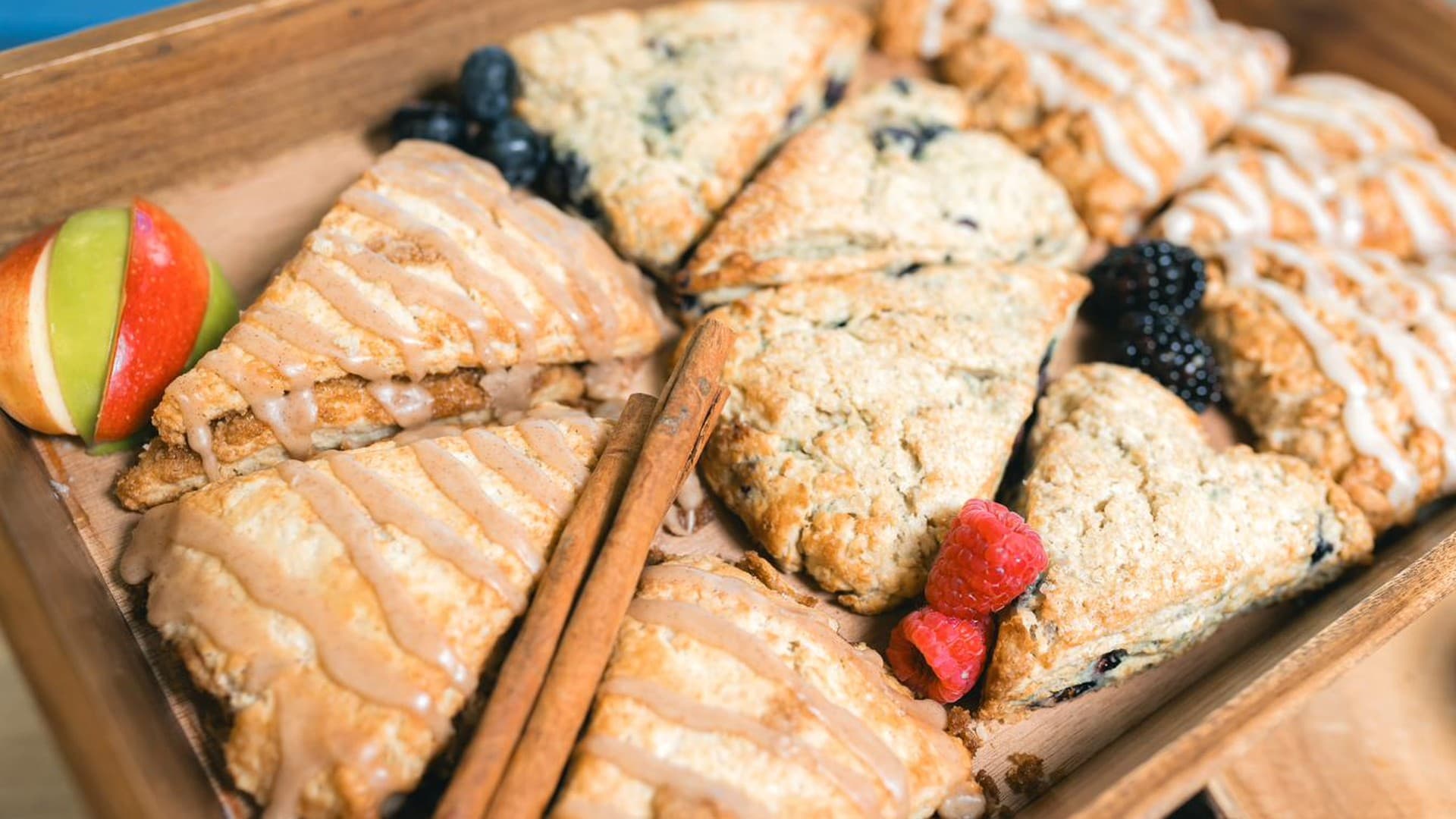
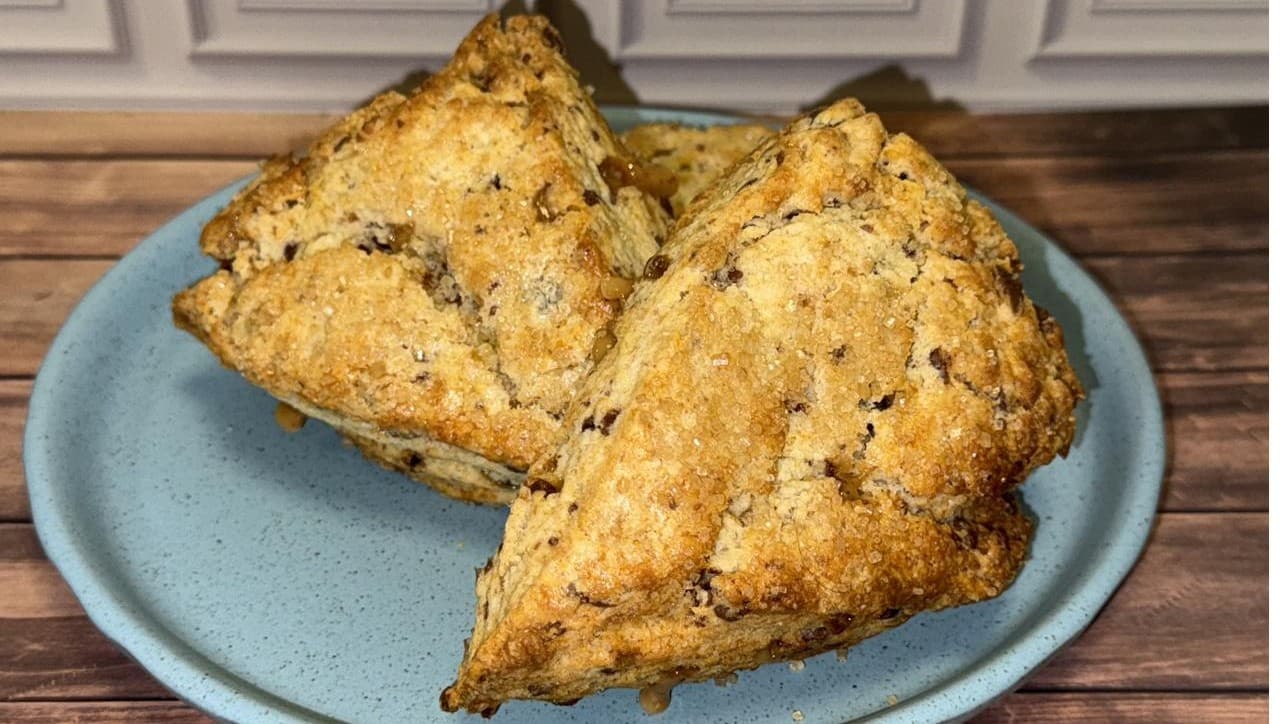
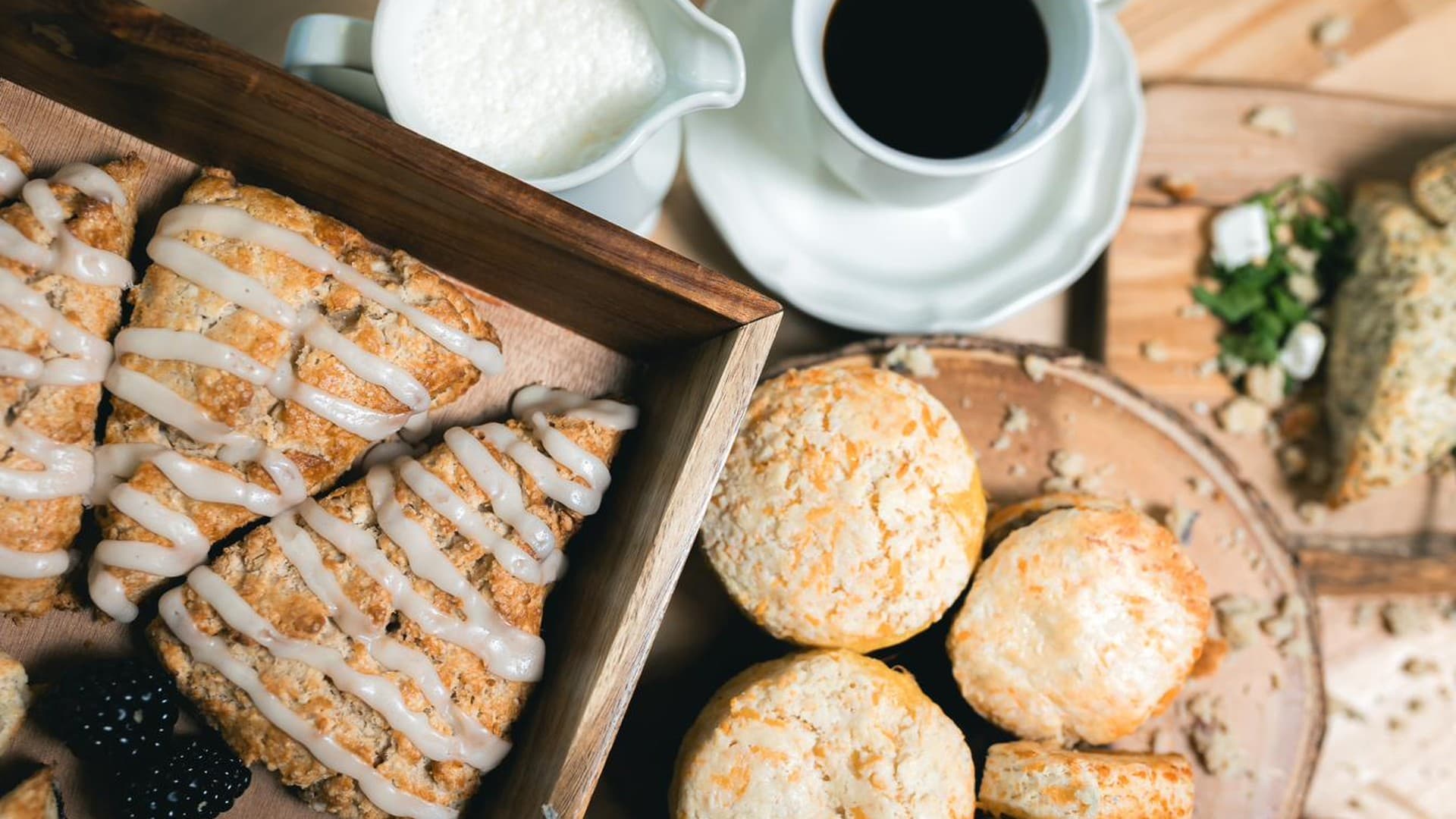
A scone is a small baked good made from flour, fat, a leavener, and a small amount of liquid, baked until the outside sets and the inside stays tender. It sits somewhere between a bread and a cake, lightly sweetened in most versions and fully savory in others. Scones began in Scotland and traveled with the British around the world, and they are best known served with cream and jam alongside a pot of tea.
What is a scone
A scone belongs to the family of quick breads, which means it rises with a chemical leavener rather than yeast. There is no proofing and no long wait. The dough comes together, goes into a hot oven, and is out again in well under an hour.
That short timeline shapes the result. A scone is not airy the way a yeast roll is, and it is not light the way a cake is. It is close, tender, and substantial, sturdy enough to hold whatever goes on top of it.
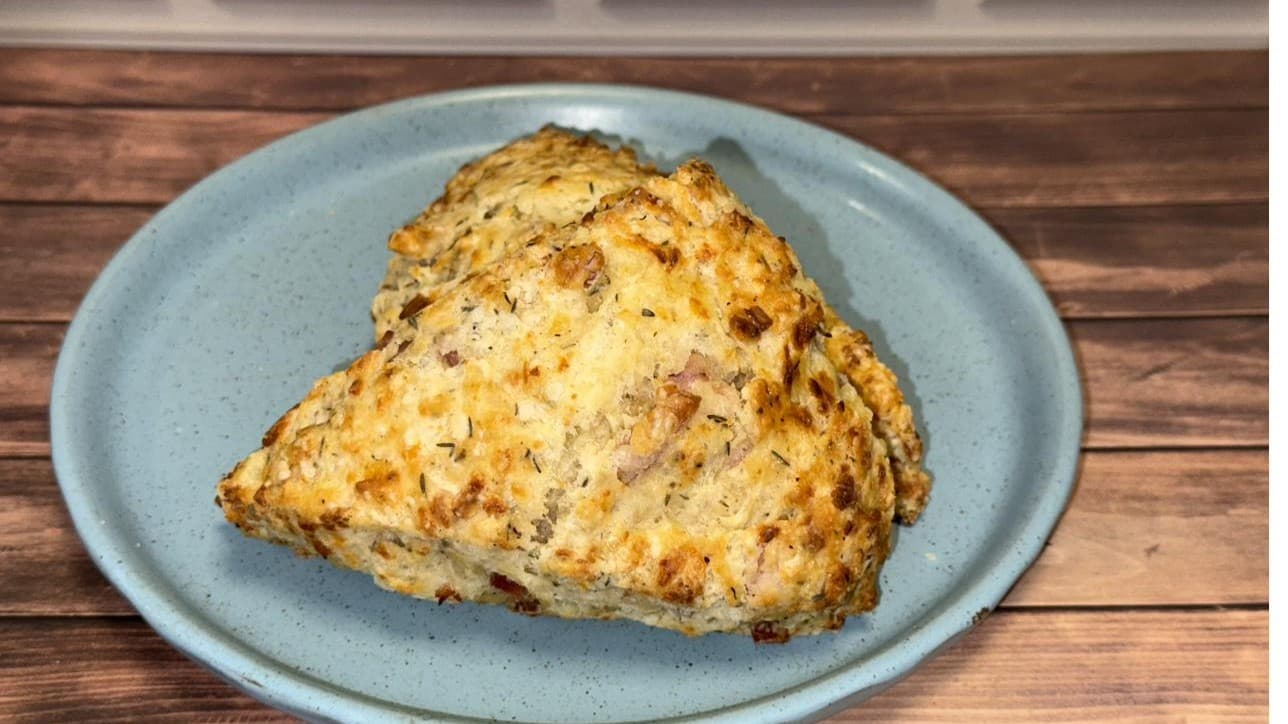
The category is broader than most people expect. A scone can be plain, studded with fresh or dried fruit, or turned fully savory with cheese, herbs, or vegetables. What holds it together as a category is the base dough and the way it bakes, not the flavor going into it.
British and American scones have drifted apart over the years, and the differences are real enough to deserve their own explanation. Our guide to traditional British scones covers where the British version came from and how it is meant to be eaten.
And if you have ever hesitated over whether to say skon or skoan, both are correct. We settled that one in our post on scone pronunciation.
What does a scone taste like
The flavor of a plain scone is restrained. It is buttery and faintly sweet, closer to a good dinner roll than to a dessert, with enough salt to keep it from tasting flat. A scone is built to be a canvas, which is why it carries fruit, cheese, glaze, cream, and jam so well without becoming too much.
Texture matters as much as flavor. A good one has a close, tender crumb that pulls apart cleanly rather than shredding. The outside sets into a thin, slightly firm shell while the inside stays soft. It should crumble a little when you break it, and it should never be dry. Dryness is the most common fault, and it is not supposed to be there.
Warm is when a scone is at its best. The fat is still soft, the crumb is still yielding, and whatever goes on top melts into it instead of sitting on the surface.
What are scones made of
The ingredient list is short and familiar. Flour makes up the body. A solid fat, most often butter, is worked into the flour, and it is what gives the finished scone its richness and its tender crumb. A chemical leavener provides the lift. A liquid, usually cream or milk, brings the dough together, and many versions add an egg for richness and structure.
Beyond that, a small amount of sugar and a little salt do the balancing. Sweet scones take more sugar. Savory ones pull it back to a trace, though rarely to nothing, because a little sugar helps the outside brown.
The other thing nearly every scone has in common is a light hand. Scone dough is not worked hard or for long. That restraint is what separates a tender scone from a tough one.
How scones are served
The traditional serving is simple. Split the scone, ideally while it is still warm, and top it with something rich and something sweet. In Britain that means clotted cream and jam, eaten alongside a pot of tea, a combination formal enough to have earned its own name and its own long-running argument about which of the two goes on first.
That whole tradition, including the cream first or jam first question, is covered in our guide to what a cream tea is.
Outside that tradition, scones are more flexible than their reputation suggests. A sweet scone is at home next to coffee at any hour. A savory one behaves more like bread at a meal, and it pairs well with soup, with eggs, or with nothing but butter. There is no wrong time of day for either. We also make the Scuffin, a scone and muffin hybrid of scone dough pressed into a muffin tin and filled, which we take apart in how a Scuffin is made.
Scone vs. biscuit, the short answer
Both are quick breads, so the confusion is understandable. The short version is that a scone is enriched with cream and often egg, which gives it a denser, more tender crumb, while a biscuit is leaner and folded so it bakes into flaky, separable layers. A scone is built to be eaten on its own. A biscuit is built to be split and filled.
The longer answer, including how the word itself came to mean two different things on either side of the Atlantic, is in our scone vs. biscuit comparison.
What makes ours different
Three things.
- Real ingredients. Real butter and real cream. Eggs from a farmer in Statesboro, Georgia. Honey harvested in Savannah and bottled blocks away from the bakery.
- Handmade, every morning. Every scone is made by hand, every single morning.
- A menu that rotates. We have over 200 scone flavors and variations, and the menu changes every week. The current lineup is always posted on the weekly menu.
How we got here
Savannah Scone Company opened in midtown Savannah in 2019. In 2025, Beth Copic became the owner and carried the tradition forward. We have since grown to two locations: the Midtown Bakeshop on 65th Street, where the baking happens, and the Downtown Coffee Shop & Scone Shop on Congress Street. For the full lineup and both shops, see our scones.
If you have not had one yet, come find us. You need a scone.
Ships nationwide
Order on Goldbelly →