Food & Culture
A Short History of the Scone
September 9, 2026 · 3 min read
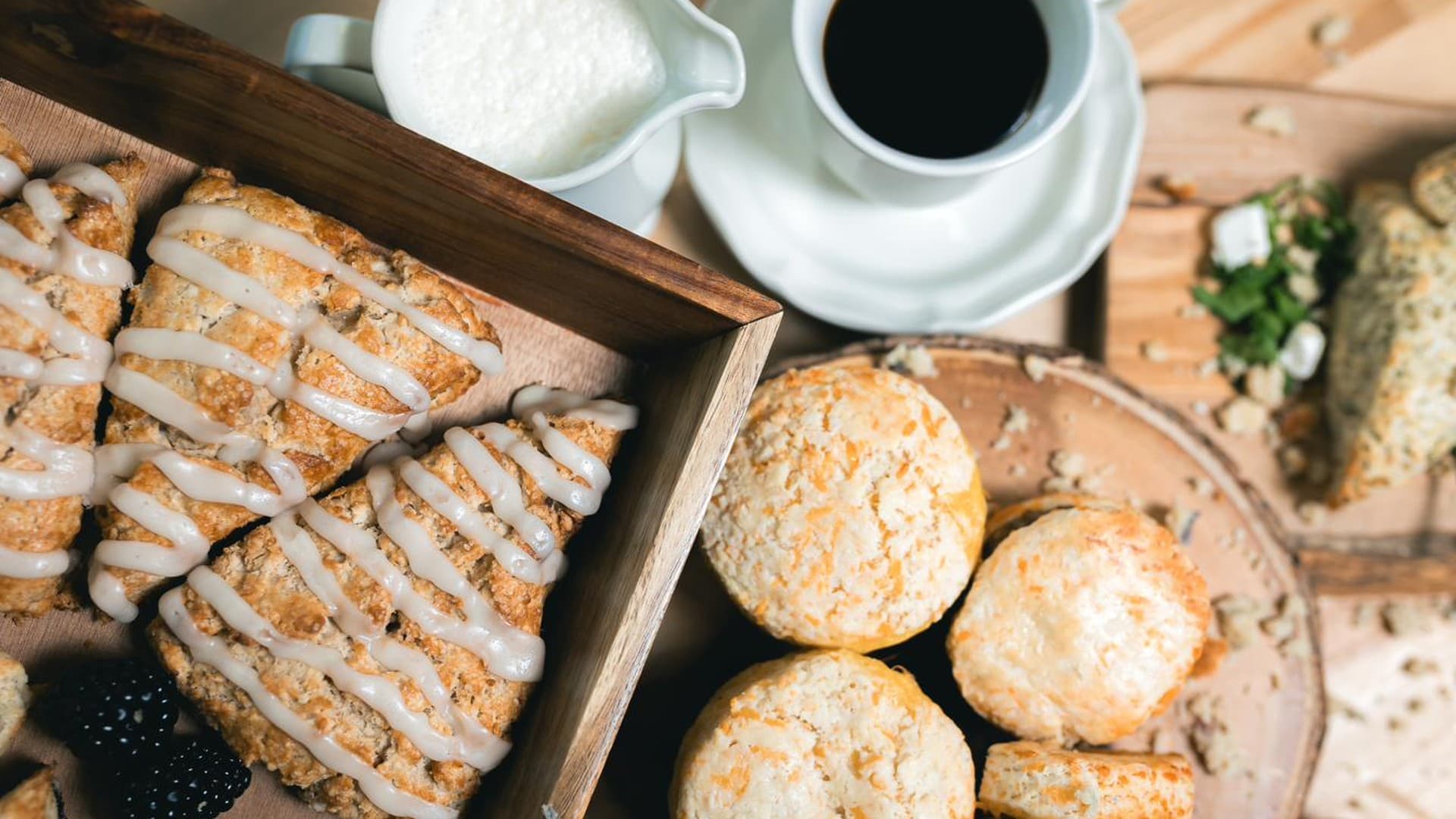
Scones have been around a lot longer than afternoon tea. The version most people picture, baked in an oven and split for cream and jam, is only about a hundred and eighty years old. The scone itself goes back further, to a flat griddle cake cooked over a fire in Scotland.
Where the scone began
The earliest scones were Scottish, and they were nothing like a bakery case scone. They were made from oats, shaped into a large round, cooked on a griddle, and cut into wedges to serve. The wedge shape survived everything else that changed.
That griddle cake was a bannock, and the wedges cut from it were scones. The word appears in Scottish writing in the early 1500s, which makes the scone older than the oven that now bakes it.
Where the name came from
Nobody has settled this one. The likeliest origin is the Dutch schoonbrood, meaning fine white bread, or the German schönbrot, which means roughly the same thing. Another theory points to the Stone of Destiny at Scone Palace in Scotland, where Scottish kings were crowned. It is a better story, and probably not the true one.
The pronunciation argument is a separate matter, and a livelier one. We covered it in our post on how to pronounce scone.
How the oven changed everything
Two things turned the griddle scone into the scone we know. Baking powder arrived in the middle of the 1800s and gave bakers reliable lift without yeast or a long wait. Ovens became common in ordinary kitchens around the same time.
Together they moved the scone off the griddle and into the oven, and made it taller, lighter, and richer. Wheat flour replaced oats. Butter and cream went in. The scone stopped being a flatbread and became a small, tender quick bread.
The Duchess who made scones famous
In the 1840s, Anna, the seventh Duchess of Bedford, ran into a problem shared by everyone in her circle: dinner was served late, and the afternoon stretched out hungry. She began asking for tea and something small to eat in the late afternoon, in private at first, then with friends.
Afternoon tea caught on across British society, and the scone caught on with it. That is the moment the scone stopped being Scottish country food and became a fixture of British life. The full ritual, and the argument about what goes on first, is covered in our guide to what a cream tea is.
How the scone traveled
British emigration carried the scone worldwide, and it changed everywhere it landed. Australia and New Zealand made it savory, with pumpkin and cheese versions that are still standard there. In America it drifted sweeter and larger, and shares an ancestor with the Southern biscuit without being the same thing, which we sorted out in our scone versus biscuit comparison.
What has not changed
The wedge shape from that first griddle bannock is still the shape most people picture. Five hundred years on, a scone is still a simple thing, made quickly, meant to be eaten warm and soon. If you want the fuller picture of what a scone actually is, start with our guide to what a scone is.
Ships nationwide
Order on Goldbelly →